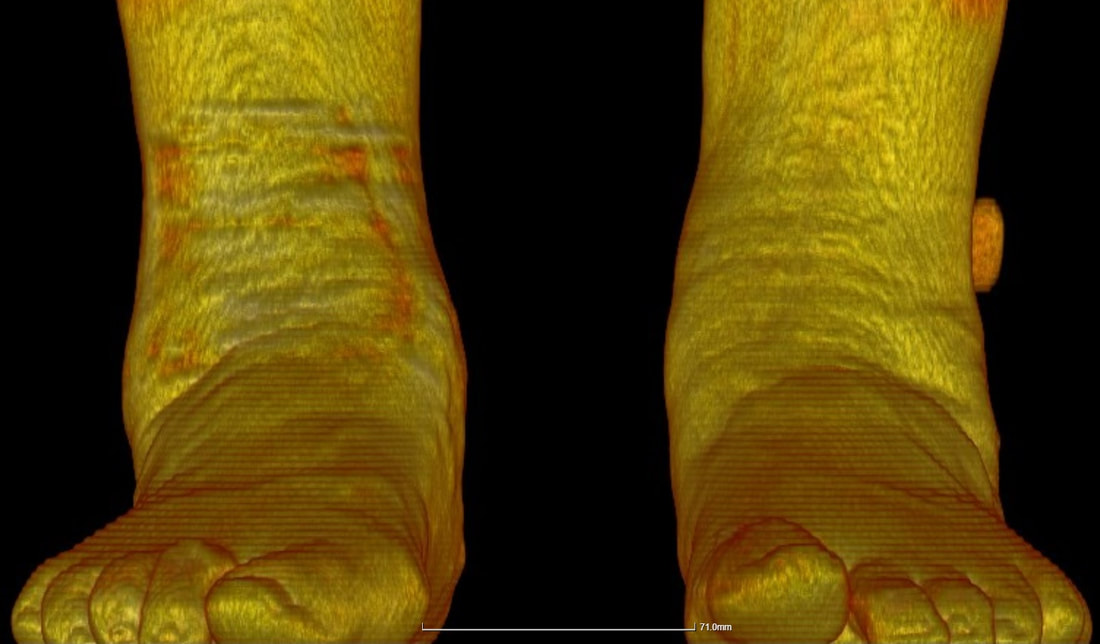
 Figure 1: A standing (Cone Beam) CT scan demonstrating the shape and position of a patient's feet. Mr Dawe and the Oving Clinic are pleased to be starting the first Standing CT scanning service based in West Sussex, with a visiting scanner from the Standing CT company. Standing CT scanning has several benefits compared to both conventional X-rays as well as some advantages over both conventional CT scans and MRI. The scanner uses a technique called 'cone-beam CT' scanning which is different to the conventional type of CT scans which re commonly performed in large scanners at major hospitals. The Cone-beam CT scan takes around 1 minute to perform. It uses less radiation than a set of weightbearing Xrays and much less radiation than a CT scan. The major benefit of standing CT is that the foot is imaged in the position in which it is used, i.e. you are standing up to have the scan done not lying down. Conventional CT scans can only show the foot in a resting position where it takes a different shape, arthritic joints might not show-up on a basic scan, but are more easily seen on standing CT. This allows the detection of subtle joint problems which can be difficult to find using other imaging modalities. These scans can help with the understanding of many foot problems such as foot and ankle injuries or fractures, ankle arthritis, midfoot arthritis, bunions, plantar fasciitis and stress fractures, as well as foot deformities such as the painful flat foot and high-arched or cavus feet and toe problems. Most major insurance companies now recognise standing CT as a new image modality and for self-funding patients this scan can be used to reduce the costs of treatment by reducing the use of conventional X-rays and MRI scans. 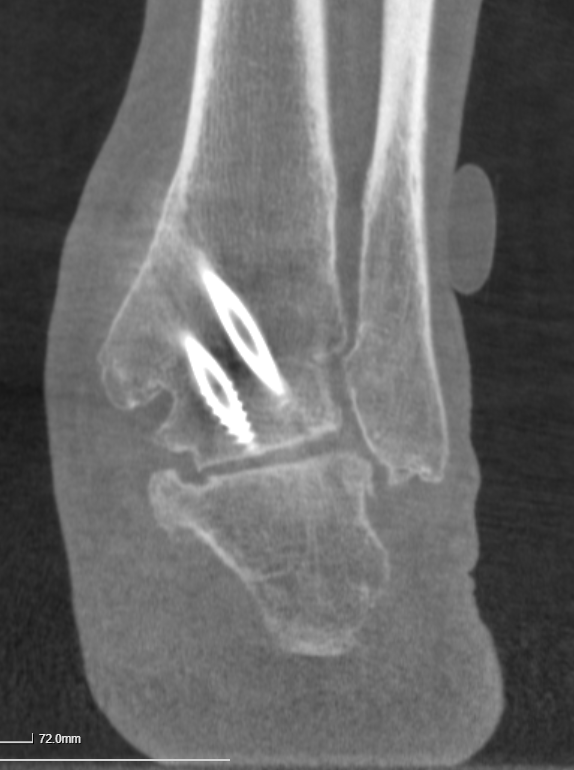 Image 2: A reconstructed Cone Beam CT image showing the hindfoot in a patient with an ankle fusion. This low cost, low-radiation study helped identify and treat the patient's symptoms.
Standing Cone Beam CT scanning can also be used to help decide on treatments for conditions affecting all lower limb conditions including hip and knee arthritis, as well as for the assessment of problems with joint replacements. Furthermore the same scanner can be used for rapidly assessing hand and wrist problems such as injuries or arthritis.
0 Comments
|
AuthorChichester Foot and Ankle Archives
November 2020
Categories |
 RSS Feed