Achilles pain can be caused by a number of different conditions. The commonest cause is called achilles tendinopathy (Which used to be known as 'achilles tendinitis' or 'achilles heel').
Achilles tendinopathy causes pain in the tendon at the back of your calf, just above the ankle joint.
Achilles tendinopathy can sometimes be a cause of achilles tendon rupture and so it is important to work on improving your symptoms to ensure you avoid this.
There is not likely to be a single treatment which will improve your symptoms on its own.
Usually improving things for you will come through a number of different small therapies.
Most people can be successfully treated without surgery, but some will need interventions such as shockwave therapy, platelet-rich plasma injections or a calf lengthening procedure such as the posteromedial gastrocnemius release or strayer procedure.
You can start your treatment on your own with the instructions below, but if you are not improving you may wish to discuss the problem with your GP or book an appointment with Mr Dawe to try other strategies.
Achilles tendinopathy causes pain in the tendon at the back of your calf, just above the ankle joint.
Achilles tendinopathy can sometimes be a cause of achilles tendon rupture and so it is important to work on improving your symptoms to ensure you avoid this.
There is not likely to be a single treatment which will improve your symptoms on its own.
Usually improving things for you will come through a number of different small therapies.
Most people can be successfully treated without surgery, but some will need interventions such as shockwave therapy, platelet-rich plasma injections or a calf lengthening procedure such as the posteromedial gastrocnemius release or strayer procedure.
You can start your treatment on your own with the instructions below, but if you are not improving you may wish to discuss the problem with your GP or book an appointment with Mr Dawe to try other strategies.
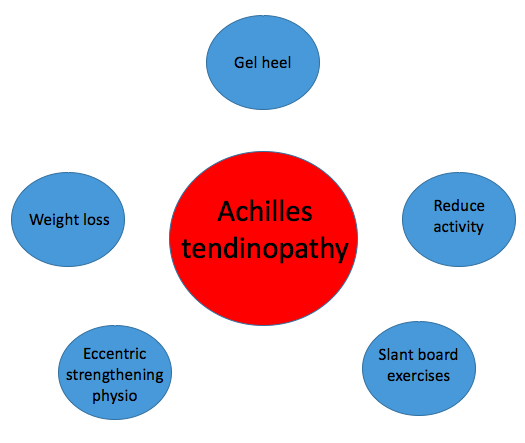
The diagram above summarises the ways you can improve pain from achilles tendinopathy without any invasive procedures.
If you are overweight, do a lot of exercise or spend long hours on your feet then you will need to work on losing weight and reducing or changing your exercise regime (running will particularly provoke your symptoms).
You should try a 'gel heel' in your shoe. This is available from the chemist and the aim is to find a device which lifts your heel in your shoe as much as possible to take the tension off your achilles tendon. You may find shoes with a heel also ease your symptoms compared to flat shoes.
You should find a physiotherapist to supervise your treatment and there is good evidence for the benefit of exercises called eccentric strengthening in improving the symptoms of achilles tendinopathy.
One of the most common reasons for achilles pain is tightness in the calf muscle. We recommend slant board exercises for this and in most people this should be part of your recovery regime from as early a stage as possible.
If things are not improving then we can offer a variety of treatments to help including shockwave therapy, injections and in some cases surgery. Discuss the best treatment for you with your surgeon.
If you are overweight, do a lot of exercise or spend long hours on your feet then you will need to work on losing weight and reducing or changing your exercise regime (running will particularly provoke your symptoms).
You should try a 'gel heel' in your shoe. This is available from the chemist and the aim is to find a device which lifts your heel in your shoe as much as possible to take the tension off your achilles tendon. You may find shoes with a heel also ease your symptoms compared to flat shoes.
You should find a physiotherapist to supervise your treatment and there is good evidence for the benefit of exercises called eccentric strengthening in improving the symptoms of achilles tendinopathy.
One of the most common reasons for achilles pain is tightness in the calf muscle. We recommend slant board exercises for this and in most people this should be part of your recovery regime from as early a stage as possible.
If things are not improving then we can offer a variety of treatments to help including shockwave therapy, injections and in some cases surgery. Discuss the best treatment for you with your surgeon.